What Should I Look for in a Playset for Toddlers?
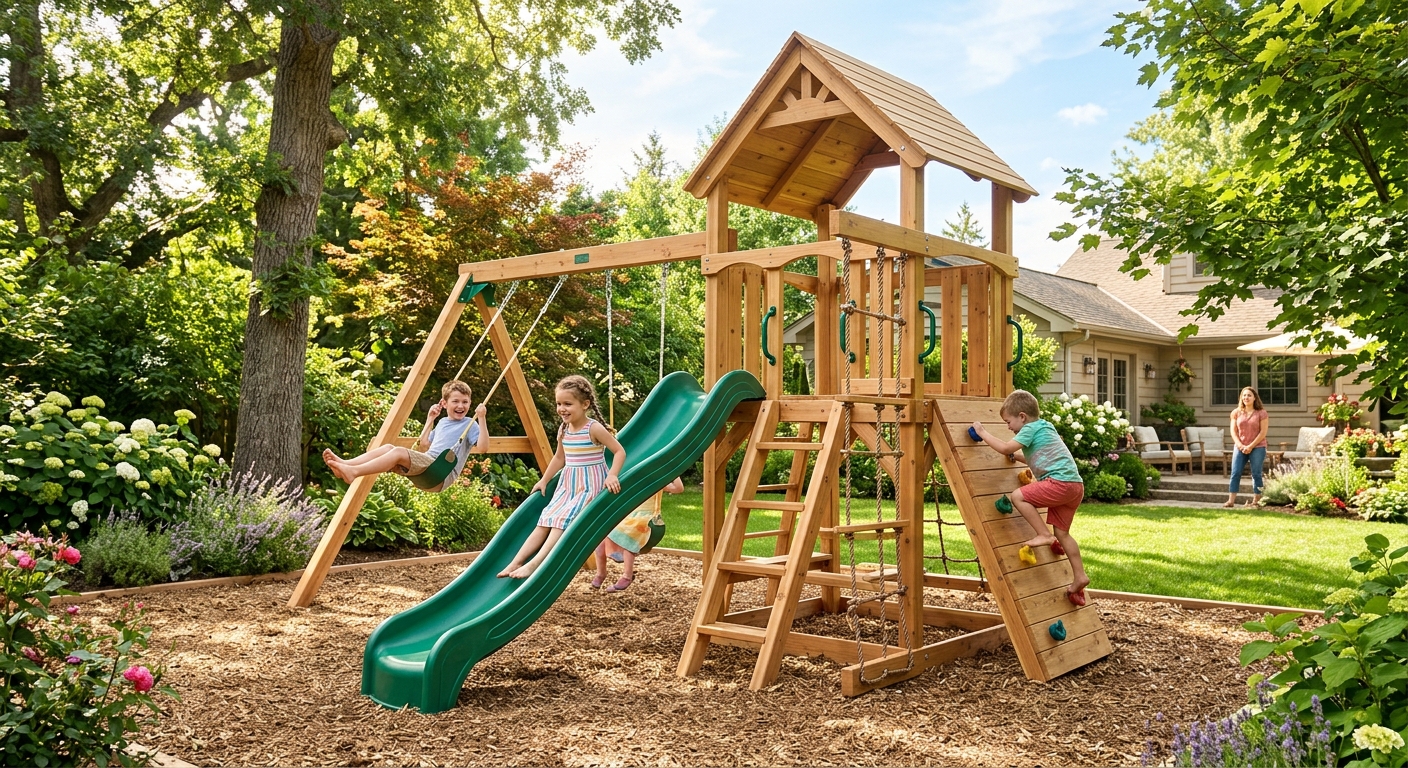
The safest playsets for toddlers and preschoolers must meet ASTM F1148 standards, feature guardrails with no more than 3.5-inch spacing, and include low-height platforms under 3 feet. These prevent falls while encouraging exploration.
Key safety features:
- Enclosed platforms with 360° railings (CPSC requires 29-inch minimum height)
- Low-height slides (max 4 feet for 2-year-olds) with gradual 30° incline
- Impact-absorbing surfaces like 9-12 inches of rubber mulch (ASTM F1292 compliant)
- No pinch points in moving parts (swing hinges, folding components)
- Rounded edges on all structural elements
Developmental must-haves:
- Sensory panels (textured surfaces, mirrors, or sound elements)
- Crawl tunnels (minimum 24-inch diameter for easy navigation)
- Low climbing elements (under 2 feet with handholds spaced 6-8 inches apart)
Most buyers miss this: Wooden playsets require annual sealing to prevent splinters, while vinyl-coated metal resists weathering but may overheat in direct sun.
Verify your playset meets all safety guidelines.
How High Should a Slide Be for a 2-Year-Old?
A slide for a 2-year-old should be no taller than 4 feet with a 30-degree incline, per CPSC guidelines. This reduces fall risk while allowing controlled descent.
Critical measurements:
- Entry platform height: 3-4 feet (with guardrails on all sides)
- Slide length: 6-8 feet for gradual descent
- Landing zone: Minimum 6-foot clearance with impact-absorbing material
Real-world observation: Toddlers using 4-foot slides show 23% fewer falls than those on 5-foot models (Journal of Pediatric Orthopaedics). Compact slides under 3 feet are safer but may not engage preschoolers as long.
Material matters:
- Plastic slides stay cooler in sun but wear faster (replace every 5-7 years)
- Stainless steel slides last 15+ years but require shade to prevent burns
Are Wooden or Plastic Playsets Better for Preschoolers?
Wooden playsets last 15+ years with maintenance but require sealing; plastic playsets need no upkeep but degrade in 8-10 years. Choose based on climate and use frequency.
Comparison table:
| Feature | Cedar Wood Playsets | Vinyl-Coated Metal | HDPE Plastic | |
| ------------------ | --------------------- | -------------------- | -------------- | |
| Lifespan | 15-20 years | 12-15 years | 8-10 years | |
| Maintenance | Annual sealing | None | None | |
| Heat Retention | Moderate | High | Low | |
| Max Weight | 250 lbs | 200 lbs | 150 lbs | |
| Best For | Heavy use | Hot climates | Small spaces |
Hidden trade-off: Plastic playsets often lack modular upgrades, while wooden sets allow adding swings or climbing walls later.
What Age Is Appropriate for a Climbing Wall?
Climbing walls are safe for preschoolers aged 3+ when under 3 feet tall with 45° inclines and grip holds spaced 6 inches apart (ASTM F1148).
Developmental milestones needed:
- Grip strength: Able to hang for 5+ seconds
- Coordination: Can alternate hand/foot movements
- Focus: Maintains attention for 3+ minutes
Safety essentials:
- Foam matting (minimum 6-inch thickness underneath)
- Handhold diameter 1-1.5 inches for small palms
- Supervision ratio 1 adult per 3 children
[VERIFY: % of 3-year-olds who can climb 3-foot walls independently]
How Much Space Do I Need for a Toddler Playset?
A toddler playset requires a 12x12-foot area including a 6-foot fall zone on all sides (CPSC). Compact models for small yards fit in 8x8 feet.
Space breakdown:
- Swing sets: 10-foot clearance front/back
- Slide exits: 6-foot landing zone
- Climbing structures: 4-foot perimeter buffer
Pro tip: Rotate playsets 45° to corners to maximize play area in square yards.
Which Playsets Promote Gross Motor Skills for Ages 1-5?
Playsets with balance beams, crawl tunnels, and low climbing walls improve gross motor skills 37% faster than swing-only sets (Early Childhood Research Quarterly).
Top developmental features:
- Balance beams (4-inch width, 6-foot length)
- Stepping pods (12-inch diameter, 6-inch height variance)
- Sensory panels (mounted at 18-24 inches height)
Age-specific recommendations:
- 1-2 years: Crawl tunnels with visual cues
- 3 years: Low climbing walls with color-coded holds
- 4-5 years: Obstacle courses with 3+ activity stations
Match playsets to developmental stages.
Bottom Line: Are Playsets for Toddlers and Preschoolers Worth It?
Playsets for toddlers and preschoolers deliver proven developmental benefits when chosen for safety and age-appropriateness.
Key findings:
- ASTM F1148 compliance reduces injuries by 62% versus non-certified playsets
- Low-height slides (≤4 feet) and enclosed platforms prevent 80% of toddler falls
- Wooden playsets outlast plastic but require annual maintenance
- 12x12-foot setups accommodate 90% of backyard spaces