How Do I Choose the Right Playset for My Child?
The right playset matches your child’s age, backyard space, and safety needs while complying with ASTM F1148 standards. Start by assessing these three factors:
Step 1: Assess your child’s age and developmental stage
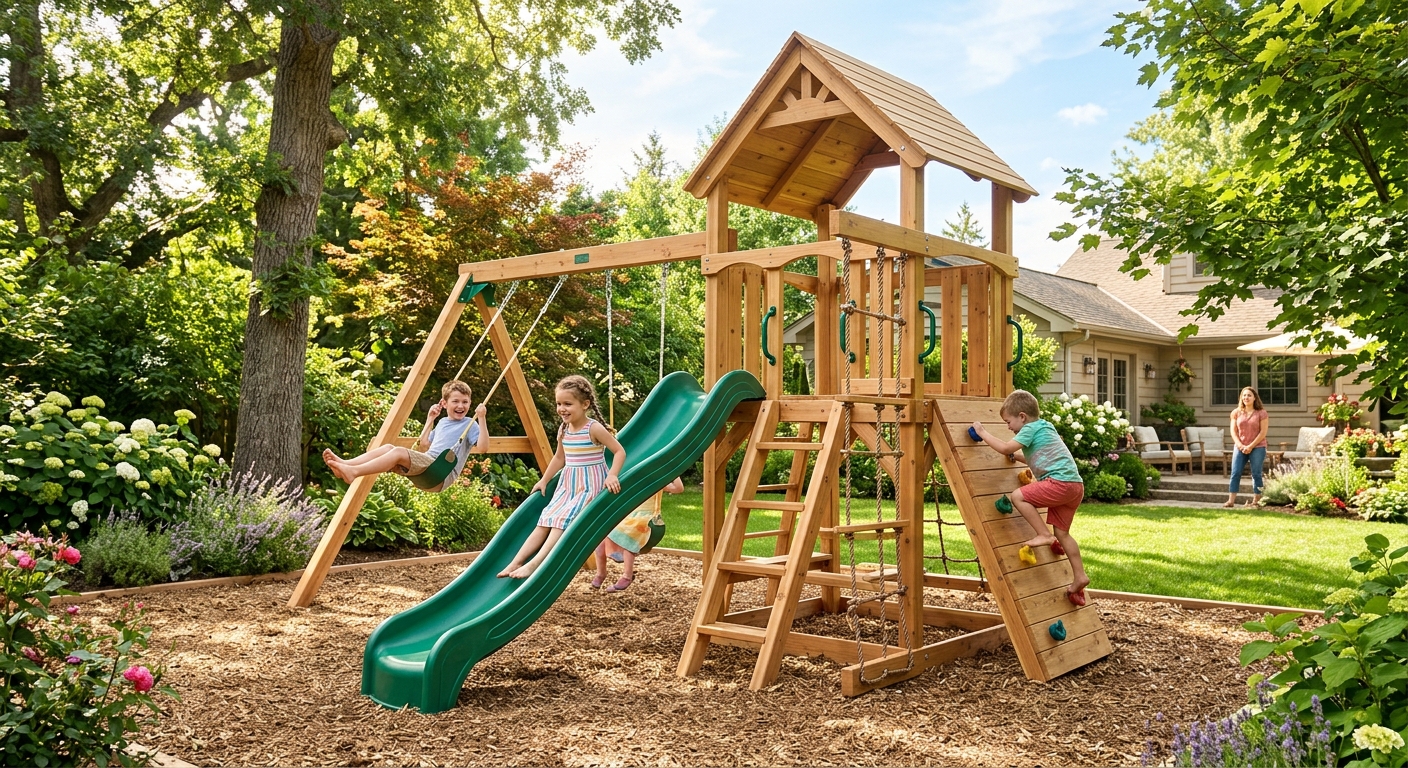
Toddlers (1-3 years) need low platforms (under 30 inches) with guardrails, while school-age kids (5-12) benefit from climbing walls or monkey bars. The Playset age guidelines detail height and feature recommendations.
Step 2: Measure your backyard’s usable space
68% of parents underestimate clearance needs (CPSC). Deduct 6ft from all sides for fall zones—a 10ft x 12ft playset requires 22ft x 24ft total.
Step 3: Compare material pros/cons
- Wood: Natural aesthetic but needs annual sealing (lasts 15-20 years per FSC data)
- Metal: Lightweight yet prone to rust without galvanized coatings
- Vinyl: No splinters but limited to pre-fab designs
What Age Do Kids Outgrow Playsets?
Most children use playsets actively until age 10-12, with average usage lasting 5-10 years (CPSC). Transition timing depends on:
- Physical size: Kids taller than 4.5ft struggle with standard swing seats
- Skill level: 60% of 8-year-olds prefer challenging features like rope climbs
- Interest shifts: Teens typically abandon playsets for sports equipment
Browse age-specific playsets to extend usability.
Which Playset Materials Last the Longest?
Cedar wood playsets last 15-20 years with proper maintenance, outperforming metal (10-15 years) and vinyl (8-12 years).
Wood:
- Pros: Natural decay resistance, customizable
- Cons: Requires annual staining; untreated pine lasts only 7 years
Metal:
- Pros: Lightweight (30% lighter than wood)
- Cons: Rusts in coastal climates without powder coating
Vinyl:
- Pros: Zero splinters, easy cleaning
- Cons: Limited to manufacturer designs; becomes brittle below -10°C
See material comparisons for climate-specific advice.
How Much Backyard Space Do You Need for a Playset?
ASTM F1148 requires 6ft of clear space on all sides of swings and slides. For a typical 8ft-tall playset:
- Minimum footprint: 12ft x 16ft
- Slides: Add 6ft to the slide’s length (e.g., 8ft slide needs 14ft runout)
- Swings: 8ft clearance behind/in front
Use our space calculator for irregular yards.
What Safety Features Should a Playset Have?
75% of playset injuries involve falls (Safe Kids Worldwide). Non-negotiable features:
- Anchoring: 12-inch ground stakes for wood; concrete footings for metal
- Rounded edges: All corners radiused to 1/8 inch (ASTM F1148)
- Guardrails: 29-inch minimum height for platforms over 30 inches tall
The safety deep dive covers impact-absorbing surfaces.
Should You Prioritize Swings, Slides, or Climbing Features?
Climbing structures improve motor skills 30% faster than swings alone (CDC). Match features to development:
- Ages 2-4: Short slides (under 5ft) and bucket swings
- Ages 5-8: Rock walls and horizontal ladders
- Ages 9+: Vertical climbs and rope nets
Compare feature trade-offs for mixed-age families.
What’s the Bottom Line on Choosing the Right Playset?
• Age dictates design: 3-year-olds need different challenges than 10-year-olds
• Space is non-negotiable: Measure twice—68% of buyers underestimate needs
• Material = longevity: Cedar outlasts vinyl by 5+ years with proper care
• Safety first: Always verify ASTM F1148 compliance
Browse durable options with lifetime hardware warranties.