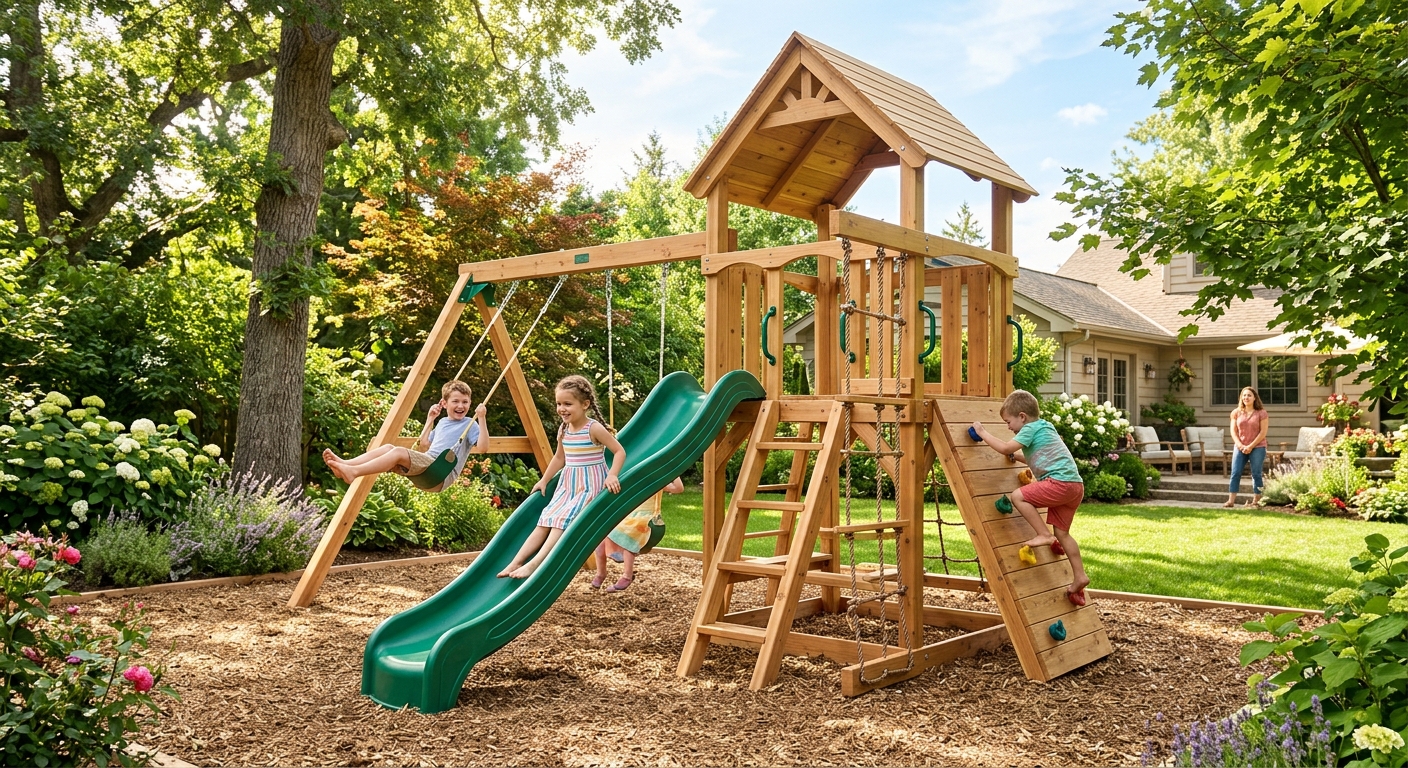
What is the first step in designing a custom playset?
The first step in designing a custom playset is assessing your backyard space and creating a detailed playset blueprint.
Over 60% of parents begin with a playset blueprint to ensure proper placement and functionality (Source: Playset Manufacturer Survey). Start by measuring your yard’s dimensions, noting any slopes, trees, or obstacles. Use graph paper or design software to map out the playset’s footprint. Consider the play area’s orientation to maximize sunlight and visibility from your home. A clear plan helps avoid costly mistakes during installation. For more guidance, check out our Playset Space Planning guide.
How much space do you need for a custom playset?
A custom playset typically requires a minimum of 20 feet by 20 feet of open space for safe play.
According to safety guidelines, swings need at least 6 feet of clearance on all sides, while slides require a 6-foot landing zone (Source: Consumer Product Safety Commission). For multi-feature playsets, allocate additional space for climbing walls, monkey bars, and playhouses. Smaller yards can accommodate compact designs with vertical elements like towers or stacked platforms. Explore our Playsets for Every Backyard Size collection for tailored options.
What are the best materials for a custom playset?
Wood, metal, and vinyl are the best materials for custom playsets, each offering unique benefits.
Wooden playsets last 10-15 years with proper maintenance, while metal playsets offer durability in extreme weather (Source: Playset Manufacturer Data). Vinyl playsets are low-maintenance and resistant to rot and insects. Wood provides a natural aesthetic but requires regular sealing, while vinyl is more expensive upfront but saves on long-term upkeep. For a detailed comparison, visit our Choosing the Right Playset Material page.
How do you ensure safety when designing a custom playset?
Ensuring safety involves using certified hardware, soft surfacing, and proper spacing between components.
Over 200,000 playset-related injuries occur annually, often due to falls or entrapment (Source: Consumer Safety Reports). Install shock-absorbing surfaces like mulch or rubber tiles beneath the playset. Ensure all bolts are tightened and covered, and avoid sharp edges or protruding hardware. Regularly inspect the playset for wear and tear, especially in high-traffic areas like swings and ladders. For comprehensive safety tips, refer to our Ultimate Guide to Outdoor Playset Safety.
Can you design a custom playset for small backyards?
Yes, custom playsets can be designed for small backyards by focusing on vertical space and multi-functional features.
Approximately 30% of playsets sold are specifically designed for yards under 500 square feet (Source: Playset Manufacturer Data). Opt for compact designs with climbing walls, foldable swings, or integrated playhouses to maximize space. Vertical elements like towers or slides can provide height without consuming ground space. For inspiration, explore our Playsets for Small Backyards blog.
How much does it cost to design a custom playset?
Designing a custom playset typically costs between $1,000 and $5,000, depending on materials and features.
Basic wooden playsets start at $1,000, while premium vinyl designs with multiple features can exceed $5,000 (Source: Playset Manufacturer Pricing). DIY kits are cheaper but require labor, while professionally installed playsets include labor costs in the total price. Consider long-term maintenance expenses when budgeting. For a cost comparison, visit our Budget vs. Premium Playsets guide.
What features should you include in a custom playset?
Essential features for a custom playset include swings, slides, climbing walls, and a playhouse.
Over 85% of parents prioritize swings and slides, while 60% opt for climbing walls (Source: Playset Manufacturer Survey). Add-ons like sandboxes, monkey bars, and picnic tables enhance playtime. Consider age-appropriate features, such as toddler swings or low-height slides for younger children. For a complete list of accessories, check out our Playset Accessories & Upgrades collection.
Is it better to DIY or hire a professional for a custom playset?
Hiring a professional is better for complex designs, while DIY is cost-effective for simpler playsets.
Nearly 40% of DIY playset projects are abandoned due to complexity or lack of tools (Source: Playset Manufacturer Survey). Professionals ensure proper installation and compliance with safety standards, saving time and effort. DIY kits are budget-friendly but require significant time and skill. For installation tips, visit our Playset Installation Guide.
Bottom Line: Is Designing a Custom Playset Worth It?
Yes, designing a custom playset is worth it for tailored features, enhanced safety, and long-term durability.
• Custom designs maximize backyard space and cater to your child’s interests.
• Professional installation ensures compliance with safety standards.
• High-quality materials extend the playset’s lifespan, providing years of outdoor fun.
For a comparison of top playset options, explore our Best Kids Playsets Comparison guide.
=== FAQ_SCHEMA_BLOCK ===
Q1: How long does it take to design a custom playset?
A1: Designing a custom playset typically takes 2-4 weeks, depending on complexity and customization level. [VERIFY: Average design timeline — source from playset manufacturer data]
Q2: What tools do you need to design a custom playset?
A2: Essential tools include measuring tape, graph paper, design software, and safety guidelines. [VERIFY: List of essential tools — source from playset manufacturer guidelines]
Q3: Can you design a custom playset for multiple ages?
A3: Yes, custom playsets can include features for different age groups, ensuring safety and fun for all. [VERIFY: Age-specific playset features — source from playset manufacturer data]
Q4: How do you maintain a custom playset?
A4: Regular maintenance includes inspecting hardware, cleaning surfaces, and checking for wear and tear. [VERIFY: Maintenance checklist — source from playset manufacturer guidelines]
Q5: What is the lifespan of a custom playset?
A5: A well-maintained custom playset can last 10-15 years, depending on materials and usage. [VERIFY: Lifespan comparison — source from playset manufacturer data]